Government Challenges. Proven Solutions.

Every government challenge is unique, but many share familiar obstacles, from legacy technology and fragmented data to evolving compliance requirements and workforce constraints. Solving them takes more than innovative technology. It takes proven approaches grounded in mission understanding and real-world results.

Explore the challenges below to see how REI combines government expertise, AI, modern platforms, and proven delivery approaches to turn complex problems into measurable mission outcomes.

Rising application volumes outpace agency capacity, creating backlogs, delaying decisions, and stalling the delivery of critical services and funding.

CUSTOMER SUCCESS STORY

From Compliance to Crisis Response: How REI Helped HRSA
Meet Urgent COVID-19 Needs in Record Time

MISSION IMPACT

65-85% faster processing and approvals; significant reduction in manual effort and backlogs

Drawn-out authorization, accreditation, and compliance cycles stall modernization, delaying the secure rollout of new applications, AI capabilities, and mission-critical software.

MISSION IMPACT

50-80% faster ATO; 30%+ developer/QA productivity gains; reduced risk and rework

Siloed data, poor visibility, and fragmented analytics delay decisions and weaken effectiveness across public safety, emergency management, and mission-critical programs.

MISSION IMPACT

75%+ improved data transparency and integration; faster insights and decision-making

Mission data trapped across agencies, systems, and organizations limits visibility, slows decisions, and undermines coordination when operations matter most.

MISSION IMPACT

40%+ improved data transparency and integration; faster insights and decision-making

Fragmented peer review and proposal evaluation add administrative burden, limit transparency, and delay funding and research decisions.

MISSION IMPACT

Higher quality reviews; faster evaluation cycles; better innovation selection

Disconnected processes across the SBIR/STTR lifecycle add administrative burden and slow execution, making it hard to move innovation from solicitation to commercialization.

MISSION IMPACT

20-50%+ productivity gains; more applicants and streamlined program management

Aging systems drive up complexity and maintenance costs while blocking the efficient delivery of modern digital services.

MISSION IMPACT

30%+ cost reductions; 50% throughput improvements

Manual grants tasks consume staff time, slow program execution, and leave less capacity for high-value oversight and decision-making.

MISSION IMPACT

Reduced administrative burden; reallocation of staff to higher-value work; better handling of funding uncertainty

Agencies are forced to trade rigorous oversight against operational speed—driving slower processing, heavier administrative load, and greater compliance risk.

MISSION IMPACT

60-75% reduction in manual review; improved compliance and transparency

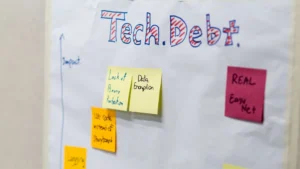
Legacy infrastructure and mounting technical debt drive up maintenance costs, increase operational risk, and hold modernization back.

MISSION IMPACT

Up to 100% efficiency gains; 50%+ cost reductions; dramatic throughput improvements